
Rating: Needs Parent Supervision
Reading level: Middle School
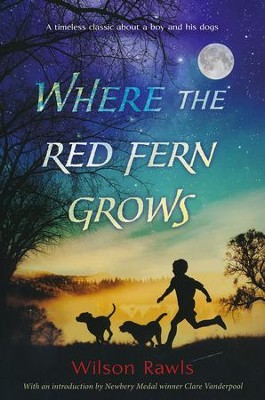
There’s a reason why this is a famous classic! I cried. I loved those dogs and I cried.
Don’t be too deterred by the list of cautions below. This one is well worth the issues. Nevertheless I wanted to be honest and thorough about possible concerns:
- Hunting. There is coon hunting and they do kill & skin the coons. Sometimes the dogs kill it; sometimes Billy uses his ax. The first time I think his dad just whacks it a couple times. It’s not gory but it’s a part of the story.
- Corporal Punishment. A few times there is talk of his mom “using the switch” when one of the kids gets in trouble, and at one point Billy says his dad never whipped him. When his mom gets really angry because he misuses her sewing scissors on tin cans (presumably ruining them), he says his mom could find the biggest switches of any woman in the Ozarks. He says she overdid it that time and it didn’t stop stinging until he was at the river. Later one of his sisters comments, “he needs a whipping.” At one point when Billy needs his dogs to stay home but they follow him he picks up a stick and threatens to “wear them out.” Then he feels guilty and lets them come with him.
- Cussing. Billy’s grandpa says, “Be damned!” twice when expressing his commitment to helping Billy get a pair of dogs.
- Premature Independence. A few times Billy goes off on his own or does something without telling his parents first. One time he walks to town (a few days’ journey there & back) without telling them where he is going. He’s not deliberately disobeying them; he’s just an independent, quiet, stubborn kid. When he comes home, he tries to think of what he’ll tell them and decides to just tell the truth. He brings gifts to try to help smooth things over.
- Bullying/name-calling. In town some kids gang up on Billy and beat him up a bit and call him names. Billy decides he doesn’t understand city folk and shouts back some rude comments, too.
- Tobacco. A couple mischievous kids come into the store to “buy tobacco for their dad” and end up chewing it a few moments later.
- Use of the term “bitch.” At one point Billy says of his female dog, “faithful little Ann, bitch though she was, had gone to the assistance of old Dan.” The context is that usually female dogs don’t fight other dogs, but this one went to help her brother. Another time Wilson correctly uses the term “bitch.”
- Accidental Fatality. A trouble-maker boy says, “I’ll kill those damn dogs.” He grabs Billy’s ax and runs at the three fighting dogs. Billy trips him up and the boy falls on the ax to his death. He asks Billy to take it out before he dies. For a while Billy is haunted by the image he saw of the boy staring at him with wide eyes and blood coming out of his mouth.
- Alcohol. At one point grandpa asks Billy to grab him some liquor and cover it so grandma doesn’t see it. He says, “you never can tell when we’ll need some medicine.”
- Superstition. Billy is a bit superstitious when he hears two screech owls, which apparently is bad luck. His grandpa shakes it off.
- Legend. The reference to the red fern in the title is based on an old Native American legend about a red fern growing between where two souls died who deeply loved one another. When a red fern grows between the graves of the two dogs, the family begins to think there is something to the legend. They praise/ attribute it to God.
Things I like:
- Billy recognizes God’s hand in bringing together his dreams. When he finally gets a pair of dogs he says it could not have happened without an unseen power. When his mom asks if he thinks God heard his prayer he says, “yes, mama. I know he did and I’ll always be thankful.
- The parents are people of faith & tend to point to God.
- Billy is generally a child of character, respectful of his elders, helpful, and faithful to his word (almost to a fault)!
- The dogs’ loyalty to Billy & to each other is heart-warming.
- Billy knows how to persevere & work for his dreams…. He doesn’t give up easily.
- The book gives a wonderful snapshot of growing up in the Ozarks in that beautiful era when people rode in buggies instead of cars, homes tended to have a bit more space between them, and a boy could venture out in the woods with two dogs and not a care beyond what mother nature brings his way.
Discover more from Jesus loves bookworms
Subscribe to get the latest posts sent to your email.
 Jesus loves bookworms