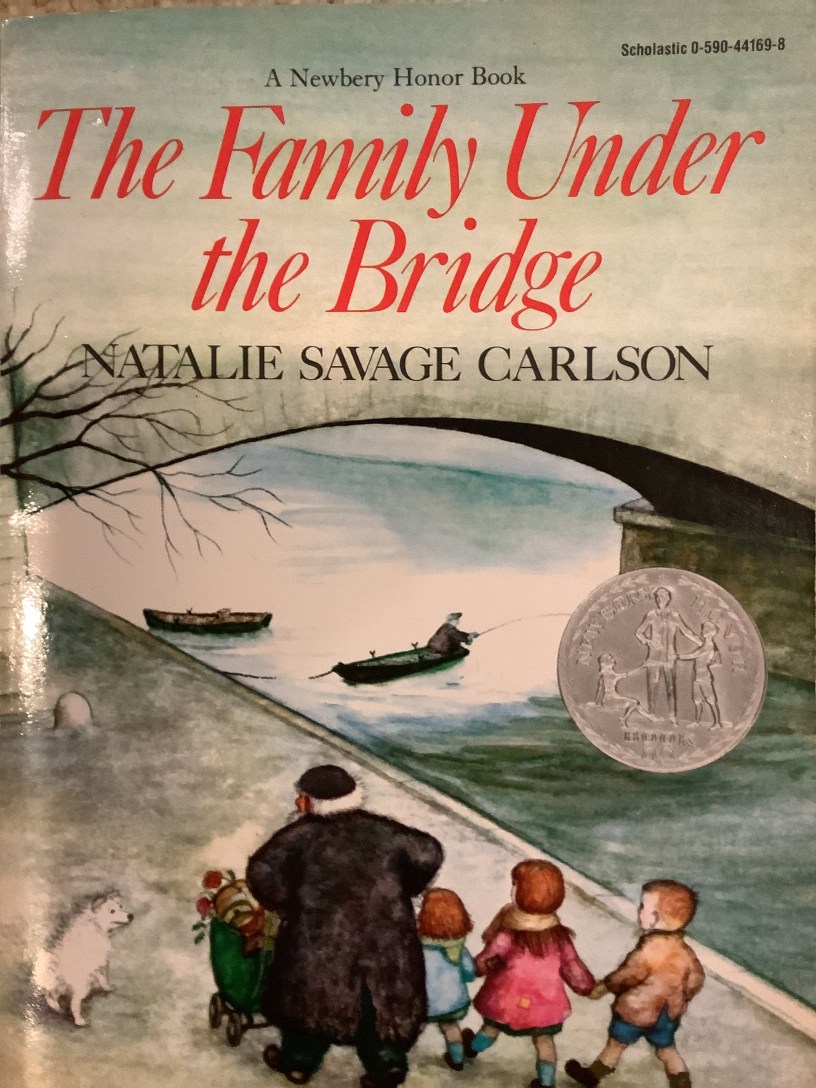
Rating: My Bookshelf
Reading Level: Mid-late Elementary, Middle School, High School, Early Elementary (as a read-aloud)
Sometimes those Newberry Honor Award people sure have great taste.
A care-free hobo stumbles upon some children who capture his heart and change him into an honest man. The children’s mother also transforms as she must lay down her pride and racist bigotry; she accepts help from people she initially does not respect (some gypsies and the hobo).
Potential Concerns:
- Naïve Racism. The mother says some very prideful and hateful things about people she looks down upon. Part of the story is her growth in this area.
- Dishonesty. The hobo lies to the children a few times. Later, he regrets some of his fibs.
- Santa. The hobo brings the children to see a Santa, which in some ways does more harm than good. On the other hand, it reveals how much the children long for a home.
- Bullying and more Santa. Some bully children shout mean things to the hobo. He threatens to tell Santa they were being naughty, to which one boy retorts that he knows Santa isn’t real.
- Stealing public property. A man cuts down a public tree to serve as a Christmas tree for his community.
There is so much to like:
- The love of family. The children and their mother fight to stay together as a family; family caring for each other is a theme throughout. The children adopt the hobo as their grandpa (redefining what makes a family) and in the end the hobo happily renounces his distaste for children and embraces a new life tied down by the responsibilities of family.
- Compassion and Empathy. The story gives a window into perspectives of many different people and ways of life: what it might be like to be homeless and not mind so much; how families could become homeless; why families might not want “government services” when they are in need and why parents may keep their kids out of school out of fear; how gypsies might be kind and welcoming even when they themselves aren’t established in riches. The book challenged many of my assumptions about poverty and homelessness.
- Battling Bigotry. The hobo convinces the mother the gypsies aren’t so bad and she overcomes racism to find out they are actually remarkably generous and kind.
- The Church offering Care. The portrayal of the church is generally refreshingly positive; at Christmas the church provides a big feast for the homeless and an open Mass service outside. The hobo comments that he’s glad it was outside because they never could have dragged him into a church building. How wonderful that the church is meeting people where they are!
- Honest Prayer. The hobo—who hasn’t talked to God in ages—becomes so overwhelmed with devotion to the kids that he tells God he doesn’t know how to pray but he knows how to beg and he’s begging God to give the kids their Christmas wish of a home. God answers the hobo’s prayer through the hobo himself setting aside his life of carefree leisure and becoming a working family man.
These issues are overshadowed by beautiful themes and I definitely will be looking for opportunities to add this one to my bookshelf!
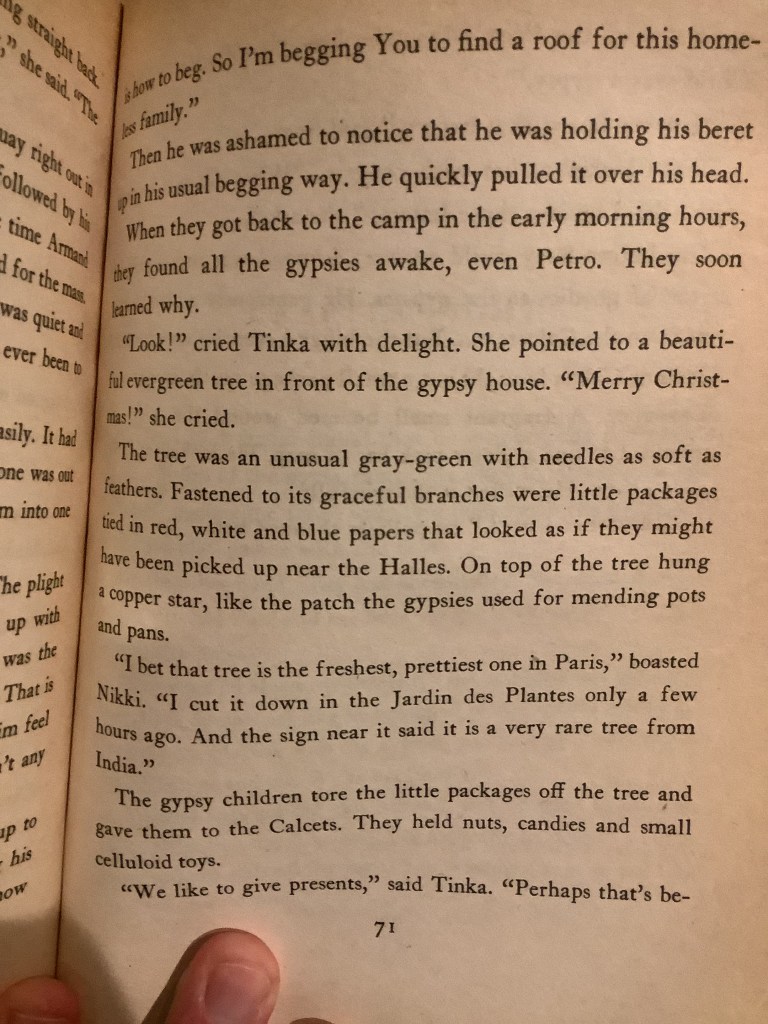
Here is a snapshot of a page to help parents get a sense of what sort of reading level we’re looking at here:
*You may also wish to check out the review of this book on ChristianParentReviews.com: https://christianparentreviews.com/book-reviews/The-Family-Under-the-Bridge
Discover more from Jesus loves bookworms
Subscribe to get the latest posts sent to your email.
 Jesus loves bookworms