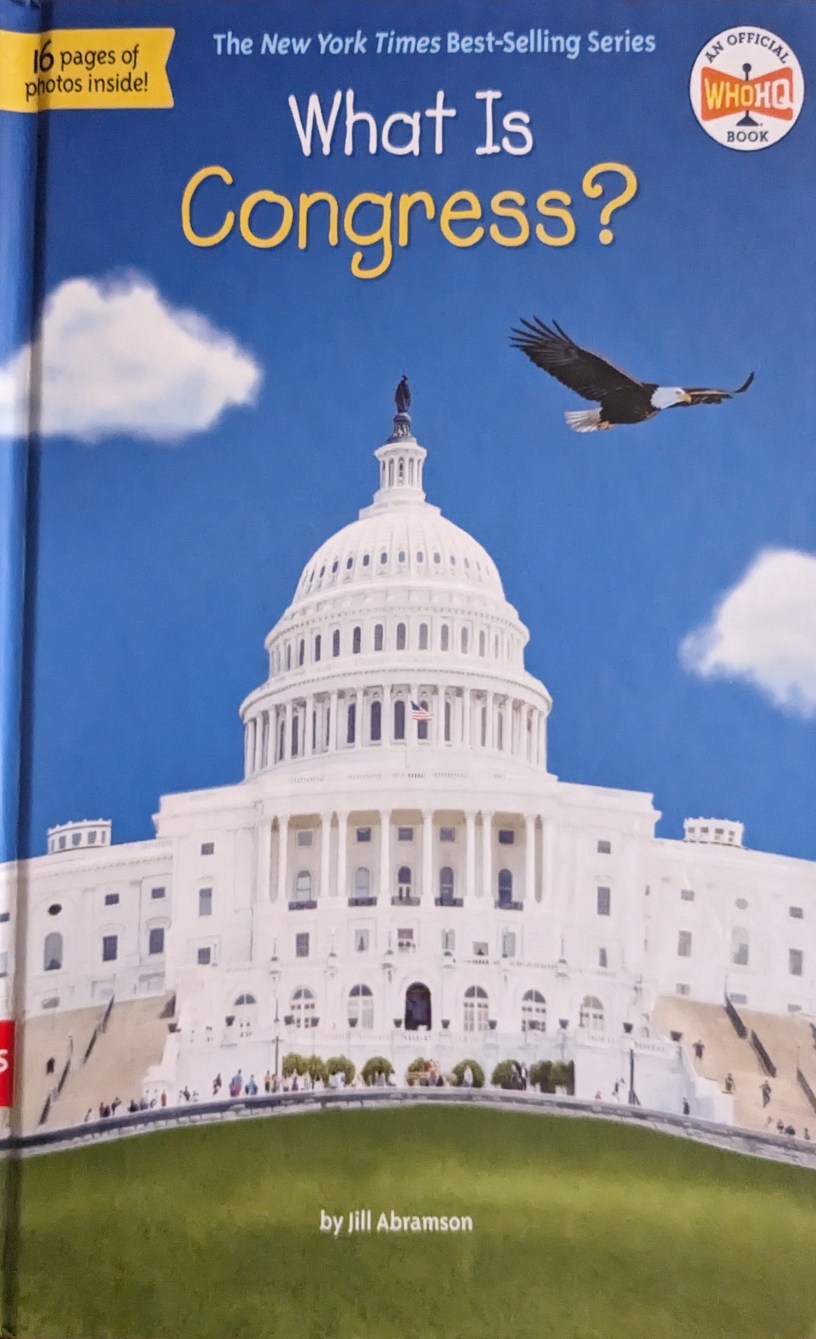
Rating: Needs Parent Supervision
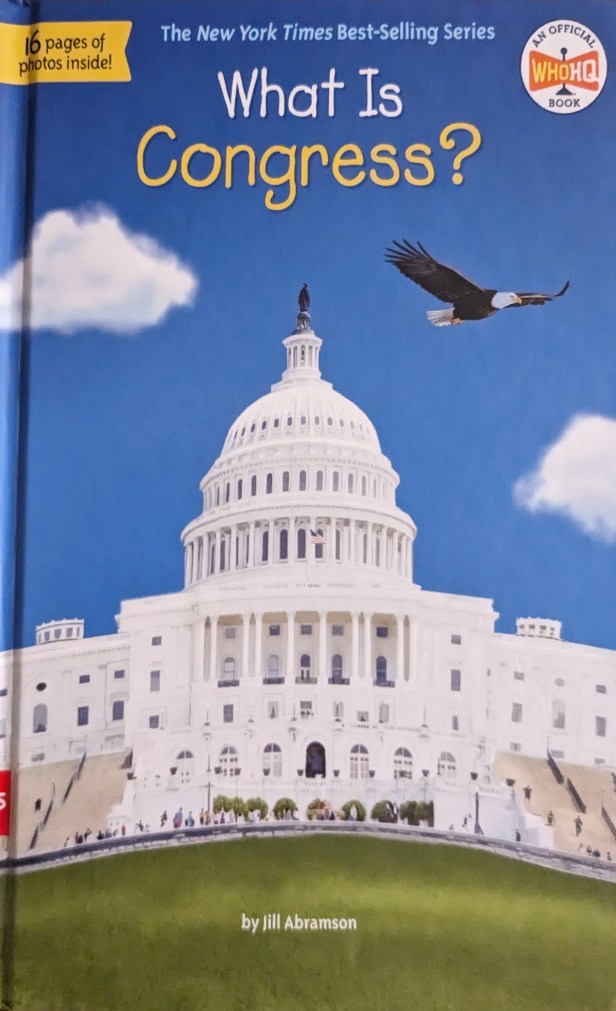
This book was informative and even though geared toward children, I learned a lot about Congress reading it! It basically served as a national history from the perspective of the Capitol. (And below is a nice little bit that helps if you–like me–didn’t know the difference between “capitol” and “capital”!)

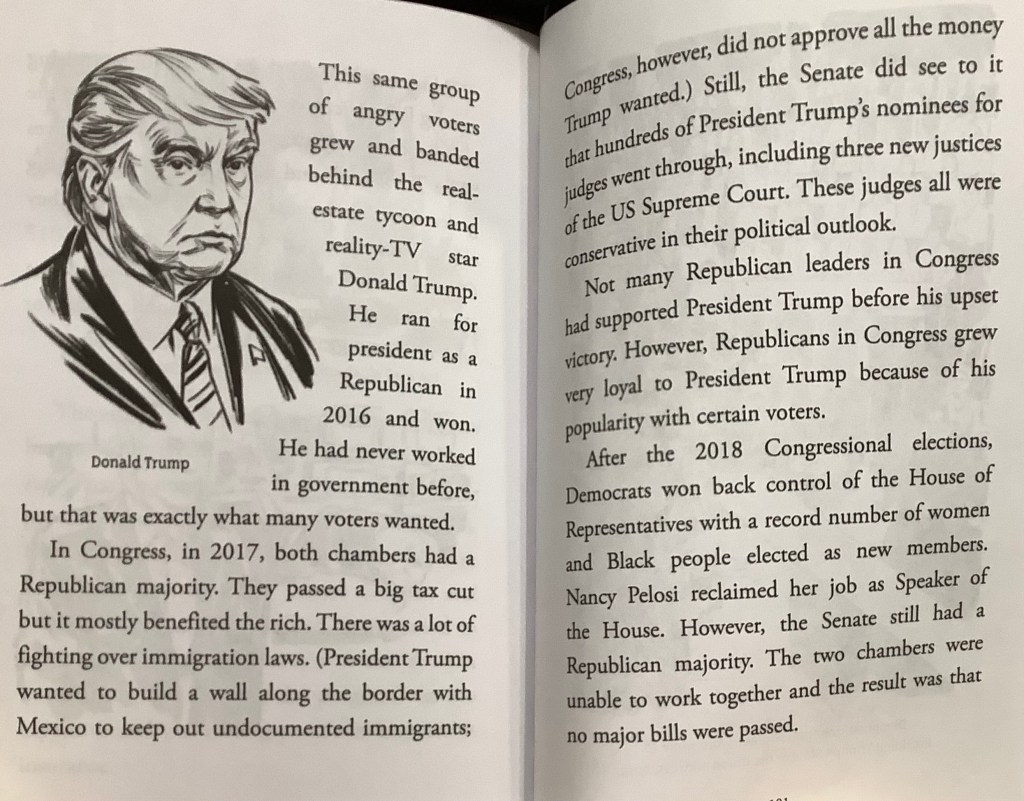
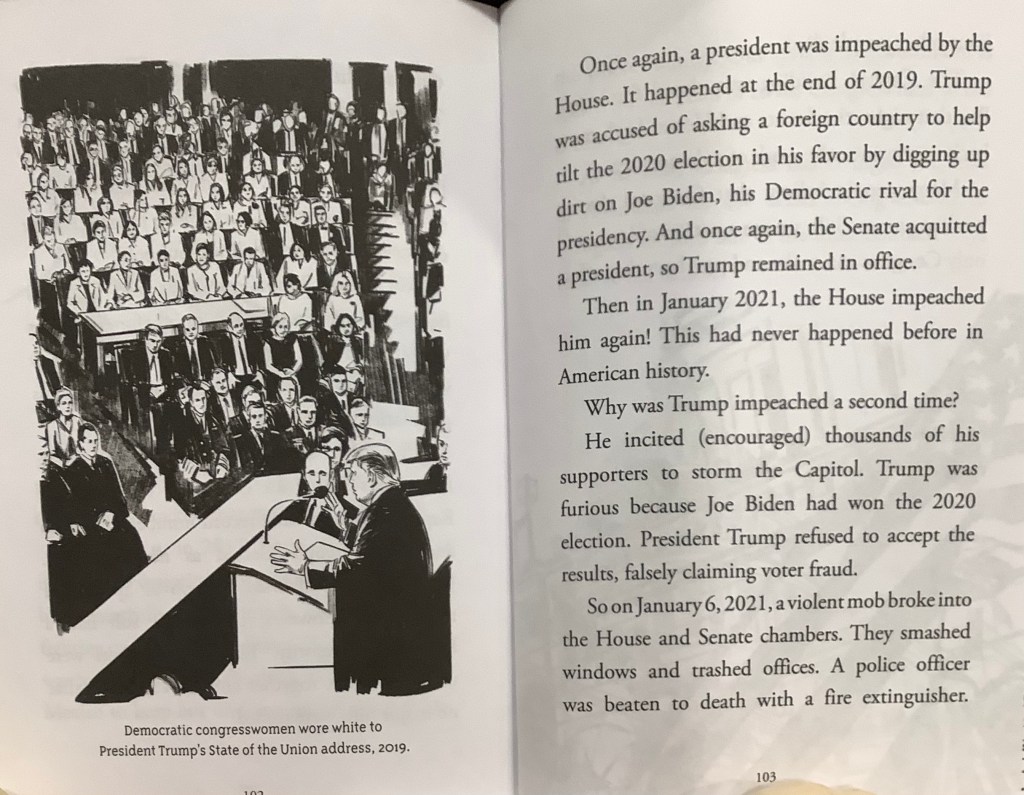
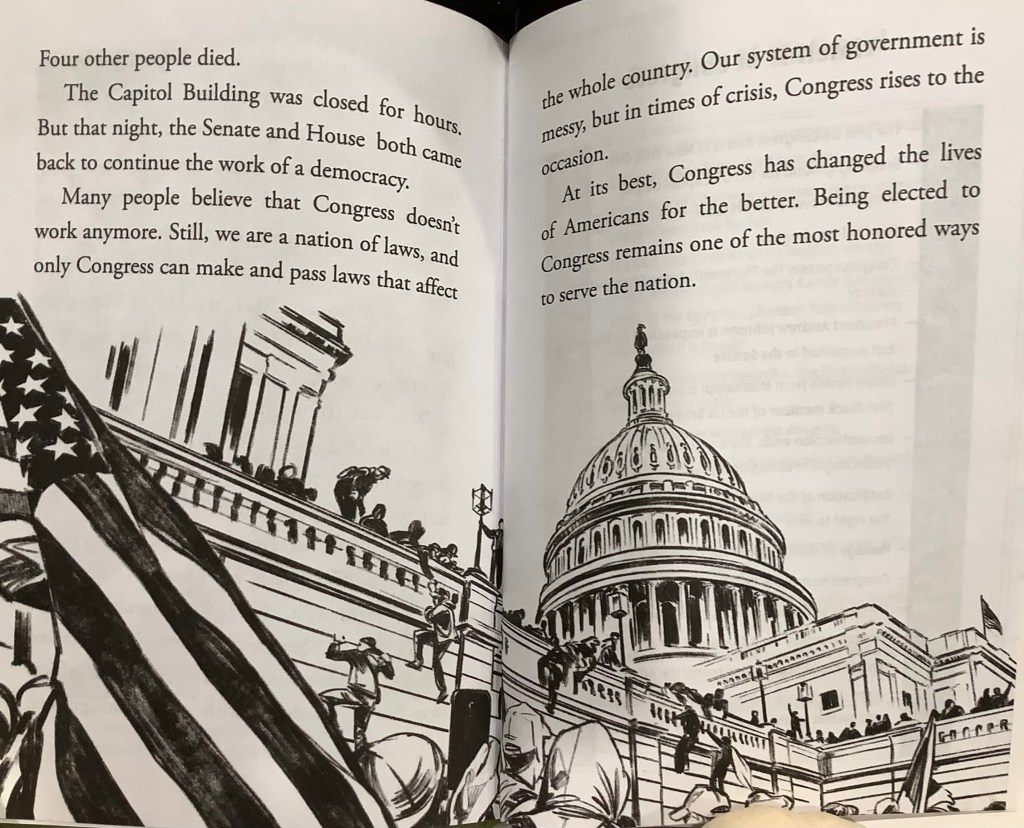
The excerpt pictured here really shows how the author carefully explains things in an accessible way.
Some of the topics were powerful, controversial, or violent:
- One congressman beating another with a cane
- Mention of a ghost of a wounded civil war soldier wandering the halls of the Capitol.
- Fights over slavery (permitting it or not) and
- a mandatory military draft during the civil war
- Womens’ suffrage
- The KKK preventing many non-whites from thriving even after slavery was abolished. (With drawings of cone-headed Klan members).
- Child labor conditions
- Prohibition and the selling of liquor
- Poverty and the great depression (with pictures of a Hooverville shantytown).
- Pearl Harbor & the decision to enter WWII
- The anti-communist frenzy, wrongful imprisonment
- Nixon and the Watergate scandall
Finally, I feel an obligation try to help parents understand the content of the final chapter: “Dividing Lines.” The chapter discusses ways congress has recently become more and more partisan. Key ideas presented include:
- Clinton’s affair and impeachment
- Newt Gingrich’s cuts on government spending, including welfare, and Newt having an affair himself
- Entering the war in Iraq: “with time it became clear that the costly war had been a mistake.”
- Obamacare: “Republicans…thought the program was too expensive…”. Later: ”Obamacare was saved by a single vote from a Republican senator who broke ranks—John McCain of Arizona.”
- A bit about Trump. I don’t want to make unfounded claims here, so you can read for yourself whether you think this representation is fair and appropriate (see below.)
Regardless of you political stance, this book may be helpful for giving some important historical insights at an accessible reading level. But you need to be sure to decide if your kid is ready for some tough issues, and be ready to discuss them.
Potential discussion questions:
- With the end of the civil was and the passing of the 13th amendment, slavery was abolished in the United States. However, many black people did not immediately experience full freedom. What were some of the barriers to social, financial, political freedom, or other aspects of freedom? In what ways do we still see those today?
- The KKK members intimidated, hurt, and killed many black people, as well some people who were white but supported blacks. Why do you think the KKK members wore masks when they did this? What ways do you see bullying, intimidation, and pain being inflicted in your life? What could you do to fight it?
- Fear drove senator McCarthy and colleagues to imprison many people on the basis that they were “communists,” who believed in a different government system. (Nowadays people can share their beliefs in communism without being imprisoned.) What do you thin are the big fears that divide us today? If not “imprisoned” for beliefs, what other penalties do people receive for having ideas that don’t match the rest of the group? What can you do to help with respecting people with different beliefs, while still holding onto yours?
- When the North and South disagreed about slavery, they went to war. How do we know when an issue is worth fighting for, versus whether we can agree to live with our differences?
- Chapter 13 talks about how politicians are becoming more and more divided. It is rare for democrats and republicans to even be friends with each other! Are you friends with anyone who believes differently than you? How can we promote both unity and freedom in this context?
Discover more from Jesus loves bookworms
Subscribe to get the latest posts sent to your email.
 Jesus loves bookworms