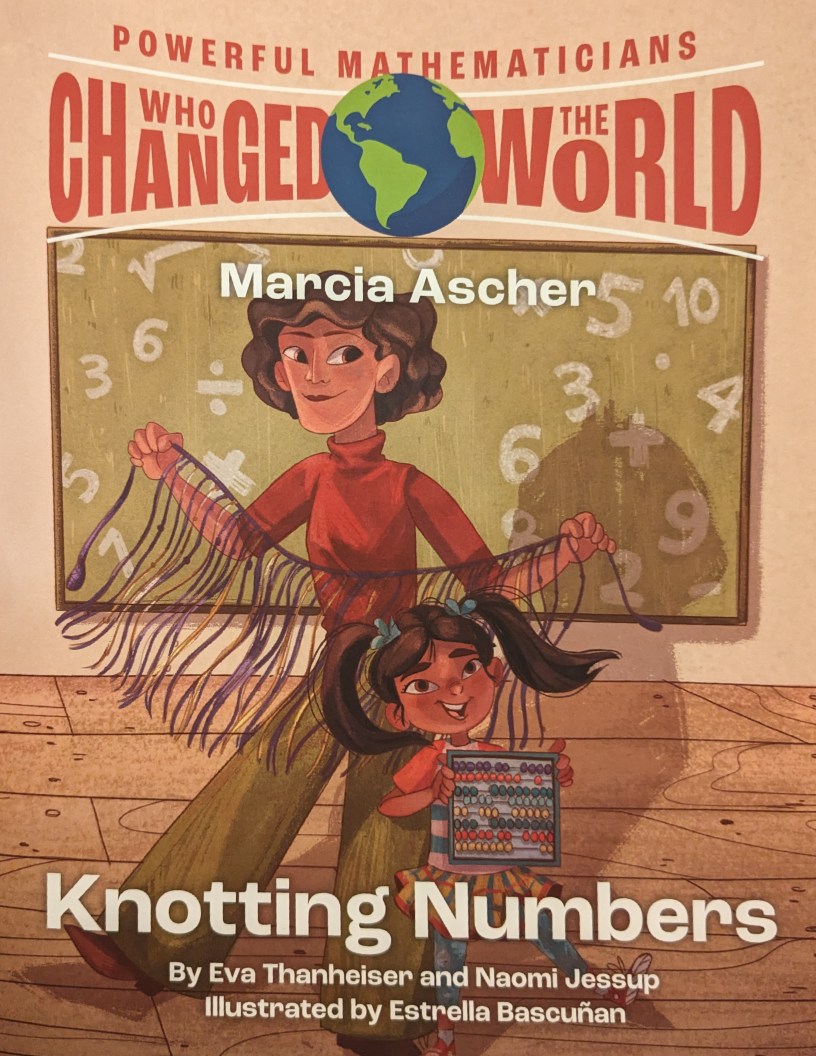
Rating: My Bookshelf
This educational fiction has some wonderful characteristics:
- Kids learn some principles of healthy math dialogue
- Readers experience a bit of what it might be like to be the new kid at school
- Readers experience a bit of what it might be like to be 1st generation American
- Kids are empowered to think about mathematics in new ways and to consider unfamiliar methods. In particular, kids grapple with a new way to add multi-digit numbers
- Kids are exposed to some ethnomathematics, which studies connections between mathematics and culture.
There are a few potential hesitations:
- The right age level is tricky to determine. The story and pictures are fitting for Early Elementary, but the concepts, word spacing, and mathematics seem better for Mid-Late Elementary. This made it difficult to offer an appropriate age. Also, it makes me wonder how this book might land with kids; by the time the mathematics is accessible, with the story be too babyish?
- At one point the guest class visitor says, “There are many ways mathematical ideas can develop, and no way is necessarily better than another.” I think I agree 100% with this statement, but I wonder if kids might take away a message of, “There is no such thing as a wrong answer” or “there is never a way that is better than another;” both of the latter statements are incorrect.
Parents should also know the book mentions that women are underrepresented in STEM, and asks students to think about immigrants, and whether there are other people that “look like you” in your classroom. I think the goal is to bring up tough issues instead of sweeping them under the rug. But it is good to be ready to discuss some tough topics.
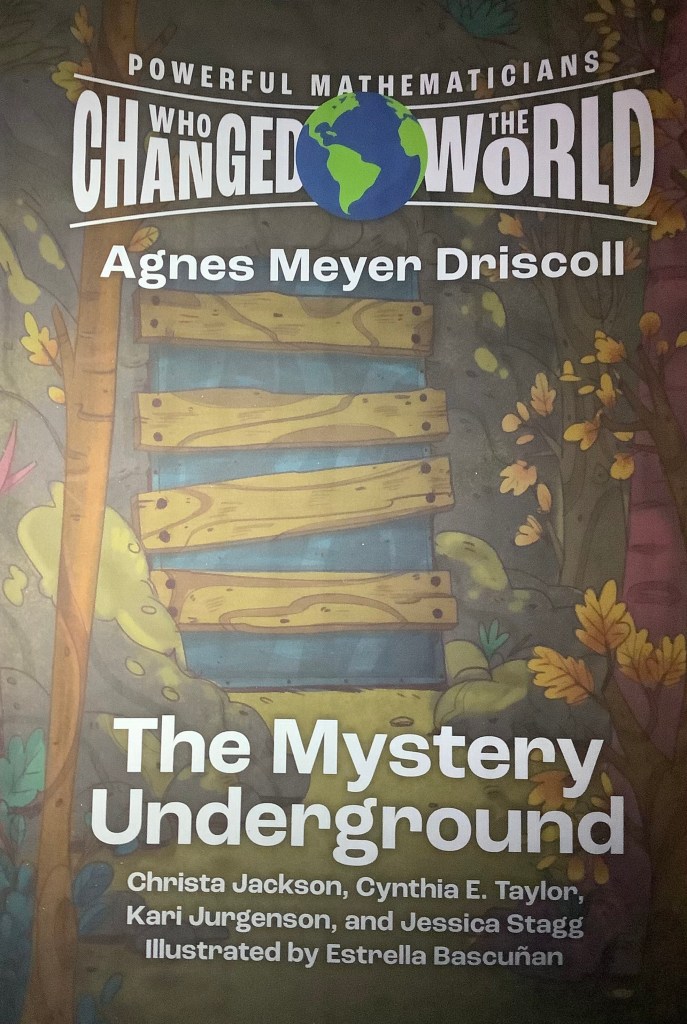
For another National Council of Teachers of Mathematics -sponsored book, check out my review of Powerful Mathematicians who Changed the World: Agnes Meyer Driscoll The Mystery Underground.
Discover more from Jesus loves bookworms
Subscribe to get the latest posts sent to your email.
 Jesus loves bookworms