
Rating: Needs Parent Supervision, My bookshelf
Reading Level: Late Elementary, Middle School
If you like Little House on the Prairie, then this one may be good for you.
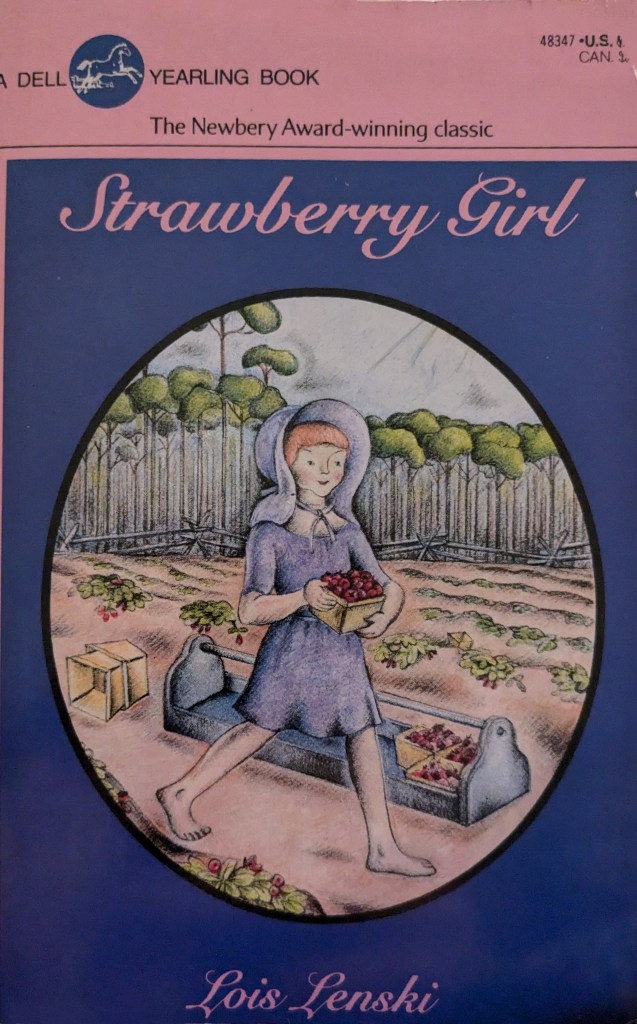
A family moves to Florida in the early 1900’s as homesteaders. They encounter tough conditions and tough neighbors, but a very happy ending with lots of resolution.
Possible Concerns:
- Accent. Tough to understand the old Floridian accent. (e.g., “Why ain’t you done tole me?” (Why didn’t you tell me?) And “Hit shore is purty.” (It sure is pretty), etc…..)
- Alcohol. A neighbor struggles with alcoholism, squanders the family’s earnings, and makes poor decisions.
- Shyness. When some young girls are shy, another asks, “What’s the matter with them? Don’t they talk?”
- Indians. Mention of “Indian” in context of enemies e.g. “Grampa was an ole Indian fighter in the Seminole war.”
- “Cracker.” Excessive use of the word “Cracker” to represent Anglo Saxons who came to settle in the south.
- Use of the word “Negro” used once to describe that she had once seen negro travellers.
Overall, I think this Newberry Award was well deserved. Lenski’s historical fiction gives me a good taste of that culture in that time, and I’m grateful she did the research and wrote this book.
If you like this one (and even if you don’t), I also highly recommend Sweet Home Alaska.
Discover more from Jesus loves bookworms
Subscribe to get the latest posts sent to your email.
 Jesus loves bookworms