
Rating: Needs Parent Supervision
Reading Level: Late Elementary
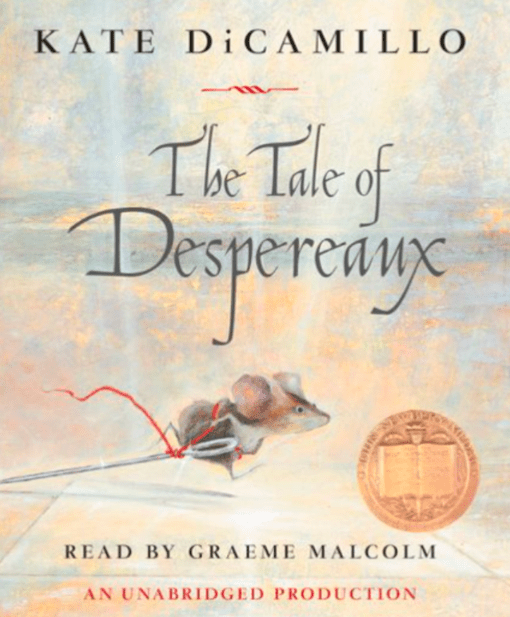
Four lives intermix in a story of tragedy and heroism. A romantic mouse’s struggles give him opportunity to be a hero. Examines what it means to be different and non-conforming, brave and empathetic.
At first I did not like it, but I came around by the end. See discussion questions at the bottom of this post.
Possible Concerns:
- Child abuse. A little girl is clocked on the ear so many times that she goes deaf and her ears turn to cauliflower.
- Child slavery. A little girl sold into slavery by her dad in exchange for a chicken, a red tablecloth, and a handful of cigarettes. The buyer has remorse and tells her so.
- Death of two mothers. The girls long for their moms, both who died rather harshly.
- Glorifying Romantic Love? The mouse says he falls in love with the girl. Then he is devoted to her like a knight to his lady. In the end they become good friends, which I quite liked.
- Lack of Obedience? The princess does not obey her dad when the king orders her to treat a mouse poorly. To be fair, her reasoning was good and his was not, but it still didn’t model listening to one’s parents.
- Cultish community customs. The mouse is sent to the dungeons to be eaten by rats.
- Sibling treachery. The hero’s own brother betrays him to authorities, his own father turns him in and calls a council.
- Deceitful Torture. A rat mentor another on torture. He says to pretend to be a friend, to find out deepest hopes, and then snatch them away.
- Idolizing stories and light? I have a hard time discerning whether this is good or bad. The author claims stories are light. I can think of one story–the gospel story–which reveals the light of the world. But there are stories that are not light. Satan’s story in the garden was a twisting of reality; it brought death. So I’m not sure how to handle this statement.
- Gore. A rope is made from dead mouse whiskers. There are dead bones in the dungeon.
- Harsh words, insulting truths. A girl is described as not very bright, lazy, chubby, with a small head. When she puts on the crown a rat tells her she looks ridiculous and will never be a princess.
- Knife. The little girl is persuaded to use a knife to kidnap a princess. A knife also cuts off a tail or two.
- Cigarettes. Part of a human traffic trade (see slavery, above).
Things I liked:
- Forgiveness is a major theme, and is posited as comparable to strong forces like love and hope.
- Mercy. The heroes choose mercy instead of death, even though a throng of villains calls for otherwise.
- Bravery, courage, devotion. A mouse enters a treacherous dungeon to save the princess.
- Empathy. The princess has empathy for her captors.
- Good example of a princess. The princess models character, mercy, empathy, unprejudiced open-mindedness, kindness–all qualities of a true princess. I do wish she handled it better when she disobeyed her dad, but overall she did pretty well.
Discussion Questions:
- A rat mentors another on torture. He says to pretend to be a friend, to find out deepest hopes, and then snatch the hope away. Have you ever seen a friend or loved one (or yourself) put their hope in something that can be taken away? Proverbs says, “Hope deferred makes the heart sick.” We must put our hope in the right things–things that can’t be taken away. Where is your hope? What are the false hopes you are tempted to put your hope in?
- The author says stories are light. Why do you think she says that? What stories do you know that are? Do you know any stories that are not light?
- Despereaux’s father experiences forgiveness and is deeply changed. The author says the Despereaux forgives his father because he knows it is best for himself. Jesus also teaches us that we must forgive. Have you ever forgiven someone? Who has forgiven you?? Did it change you?
- What do you think are the characteristics of a true princess in God’s kingdom? How does Princess p illustrate these characteristics?
Discover more from Jesus loves bookworms
Subscribe to get the latest posts sent to your email.
 Jesus loves bookworms