
Rating: My bookshelf
Reading Level: Late Elementary
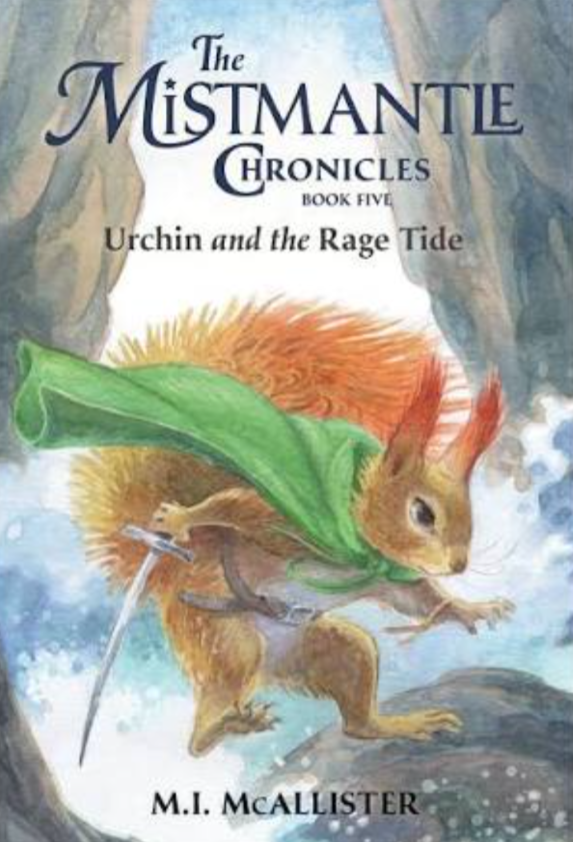
Another winner that illustrates honor, courage, and reliance on God (“the Heart”). This one brings up false teachings and religious cults. Read on…
Possible Concerns (Spoiler Alerts!)
- Prayers to dead saints. When characters are in peril, they pray to God (“the Heart”), and also to dead saints to ask them for protection or strength. When the King dies and the characters grieve, they talk to the king as if he can hear them in death. If I understand correctly, this practice is aligned with some Catholic traditions in which prayers go up to saints that have gone before. It doesn’t align with my theological perspective, but the overall themes of the goodness of God and his provision are much stronger than these prayers, so I don’t think this is enough for me to exclude this book from my bookshelf. It is however, worth a quick conversation with my reader about how we don’t practice this in our family, and we direct our prayers to God alone.
- Cults/False Prophets. A squirrel believes himself to be a prophet and a leader, and his pride and ambition lead him to be offended and to commit crimes against the island of Miss mantle. He leads a small group of Islanders into danger, and puts the king and his helpers at risk as they tried to save them or at least the children in their care. This would be a great opportunity to talk about how Jesus warned us that there would be false prophets, and wolves in sheeps’ clothing. You could talk with your kid about the characteristics of the false prophet that give him away as such (you can tell a tree by its fruit!), and also characteristics of cultish behavior to look out for.
- Freedom of Speech. The book treads on difficult ground here: the good King imprisons a false prophet, because they are going through a dangerous time and his teaching is endangering animals. However, by imprisoning someone who disagrees with his authority, he begins to look somewhat like a tyrant who is not allowing free speech under the guise of looking out for the safety of his Island. This is not really addressed in the book, but it could make for another interesting conversation with your reader about when it is okay for governments to imprison people who disagree with them.
- Insanity. Eventually, the false prophet is treated as insane and given medicine to try to help him, but he refuses to drink it.
- Peril. Arson, tsunamis, poisoning, and other peril.
- Self sacrifice in death. Based on a prophecy, a king who is nearing death due to an old war wound sacrifices himself to bring back a young squirrel to the island. It is a beautiful picture of servant leadership, but maybe worth a conversation with your reader about the conditions under which we should let a prophecy lead us to give ourselves over for death. It could be very shaky ground if listening to a false prophet.
Things I liked:
- Prayers to “The Heart,” who is the name used for the God who looks after their island. There is only one God prayed to.
- Honor & Bravery. The main characters and their mentors are full of honor and fight for the weak/oppressed.
- Selelfdom. There are themes about how a good King is one in which his servants serve him out of freedom, not out of slavery.
- Self sacrifice/servant leadership. The king gives himself up for the sake of the island and one of the Islanders. It is a beautiful picture of giving up oneself for others.
This belongs on my bookshelf, but I will keep it high up so that a kid must be the proper age before reading it.
See also my reviews of all the books in the Mistmantle series: Book 1: Urchin of the Riding Stars, Book 2: Urchin and the Heartstone, Book 3: Heir of Mistmantle, Book 4: Urchin and the Raven War, and Book 5: Urchin and the Rage Tide.
Discover more from Jesus loves bookworms
Subscribe to get the latest posts sent to your email.


Comments are closed.